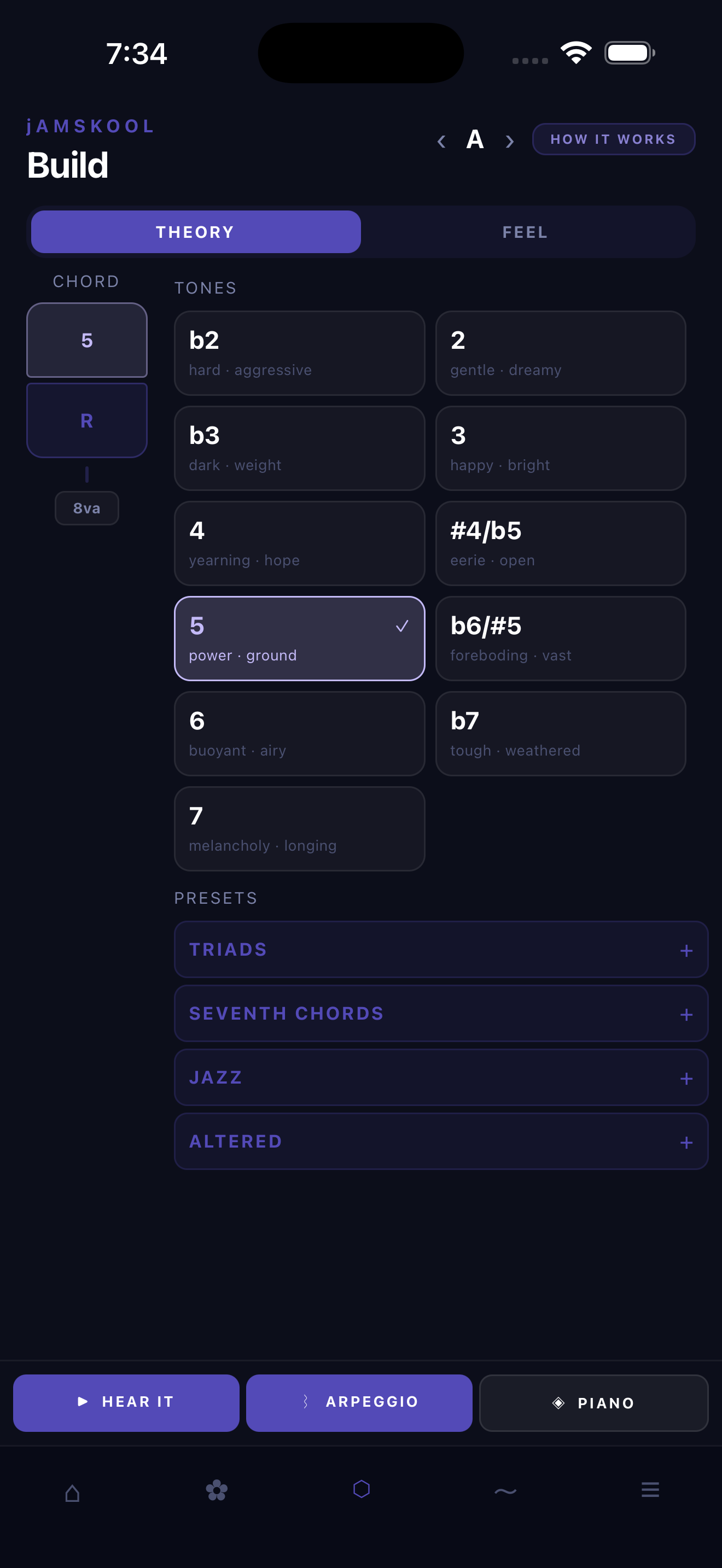
RThe root. Home. The anchor every other tone is measured from.
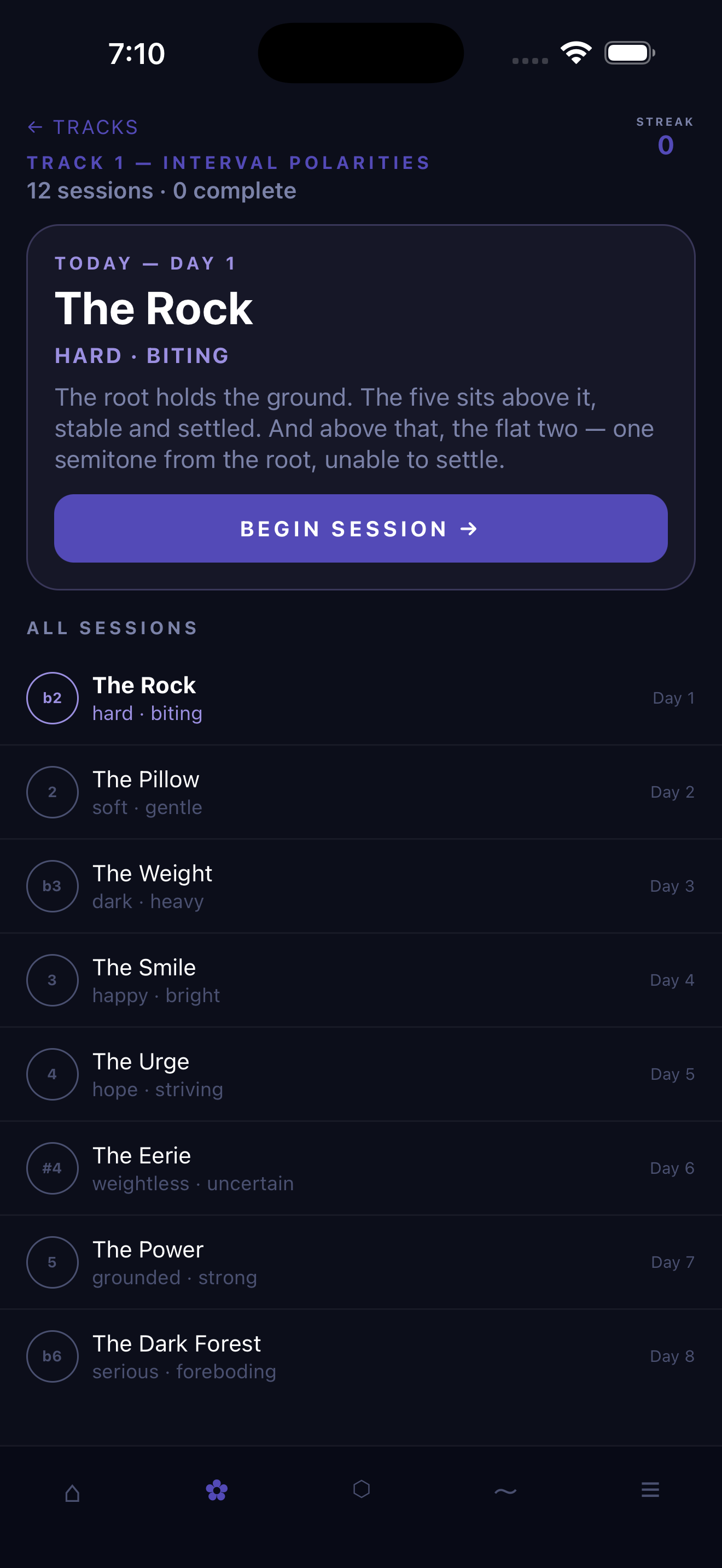
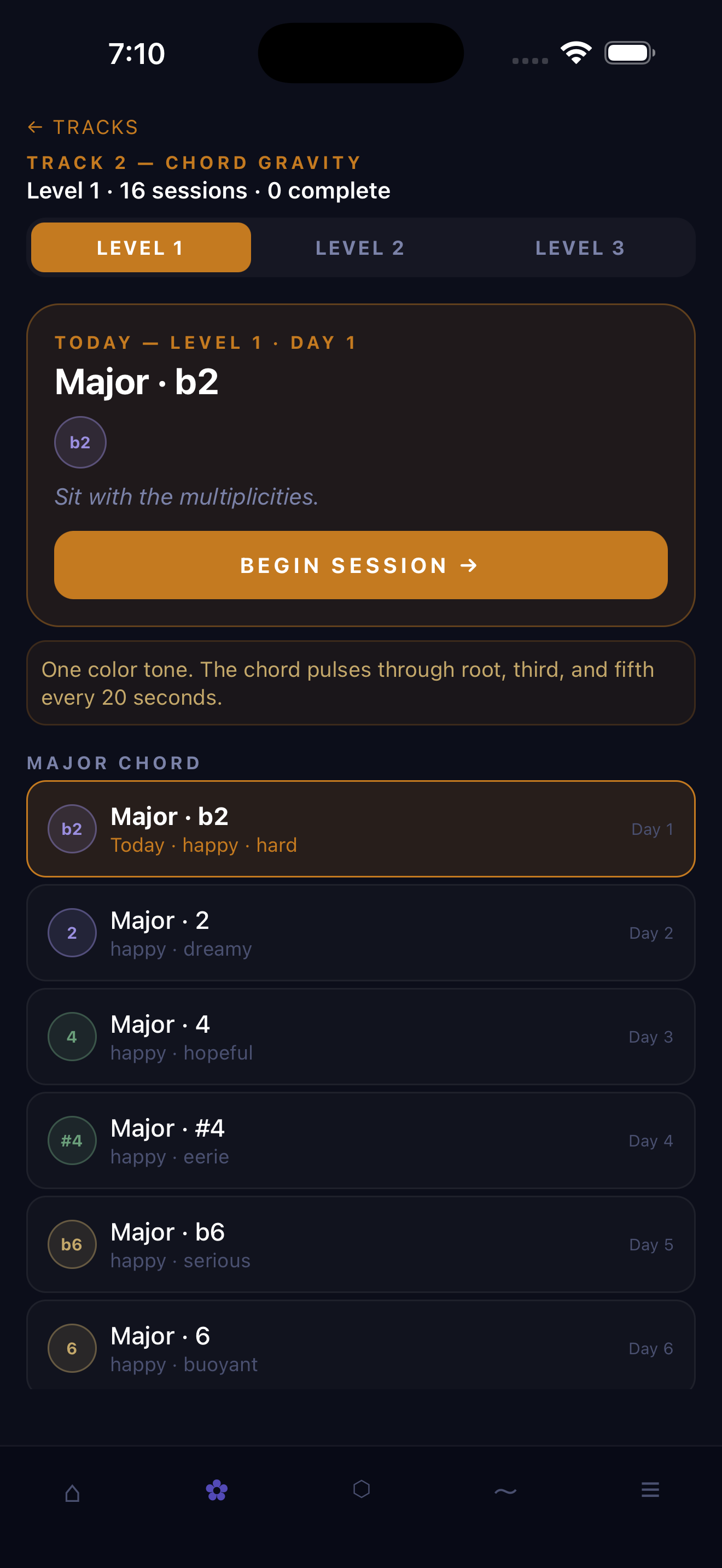
b2Hard, aggressive, biting. One semitone from home — the most restless interval in the language. The pebble in your shoe.
2Gentle and dreamy. Two steps from home with no urgency, no commitment — just open air.
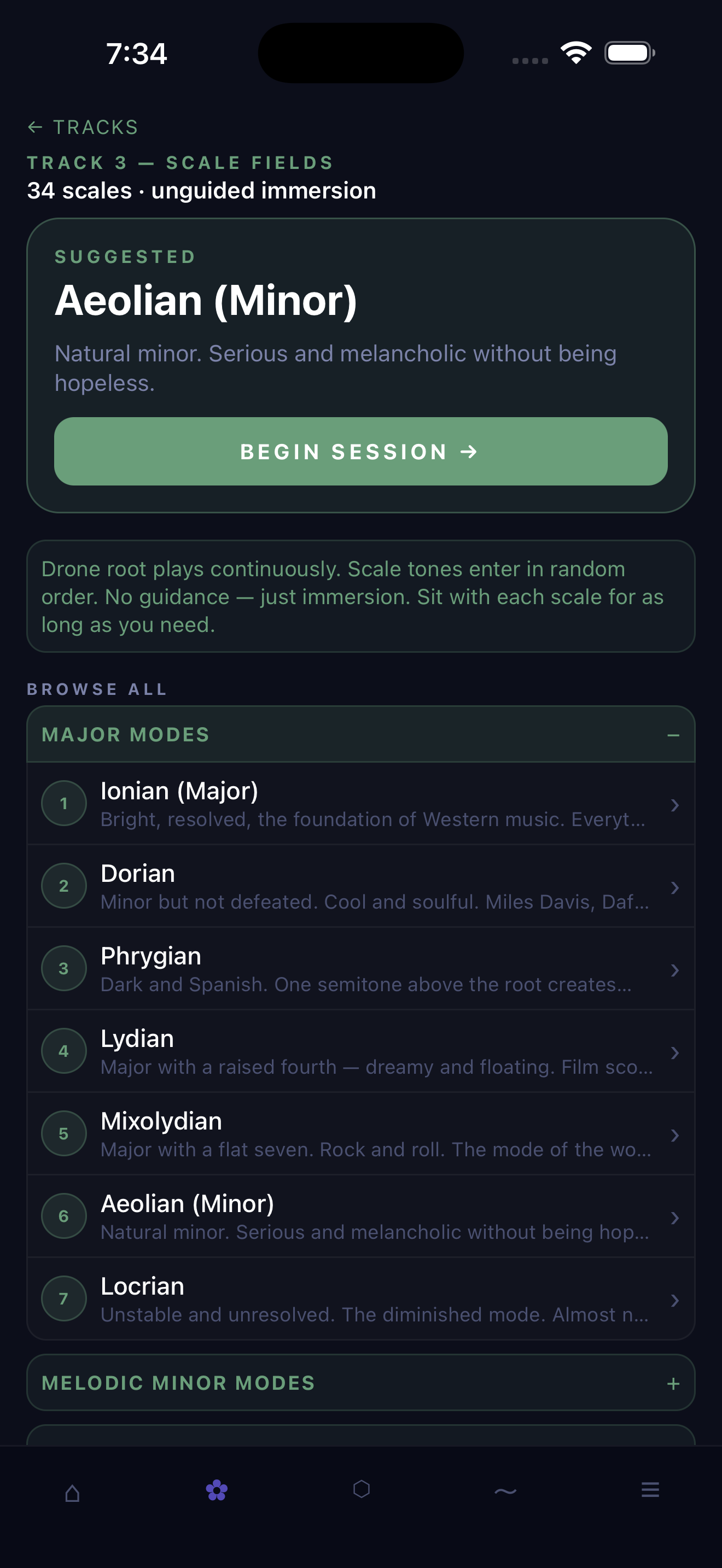
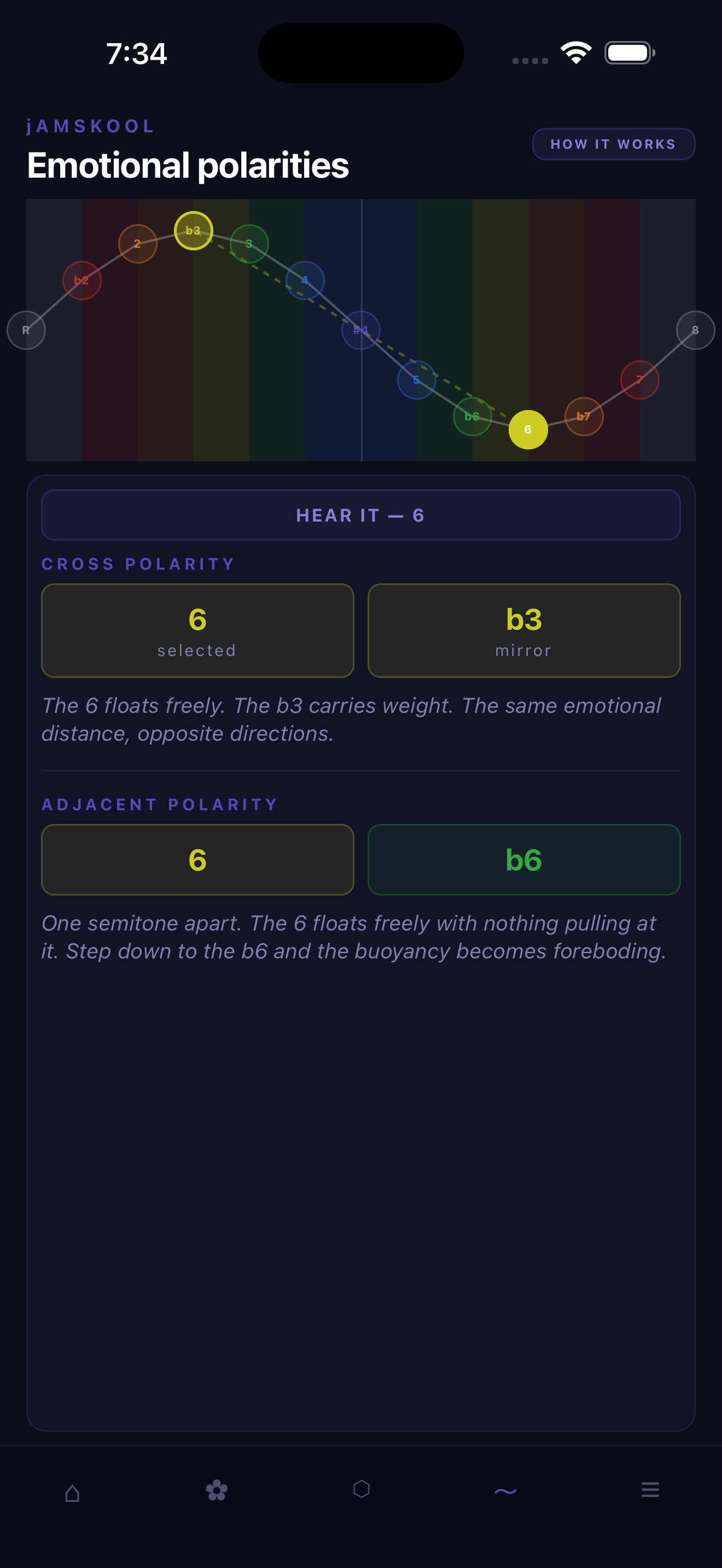
b3The minor third. Makes the chord sad or dark. Heavy but not hopeless. One semitone below the major third.
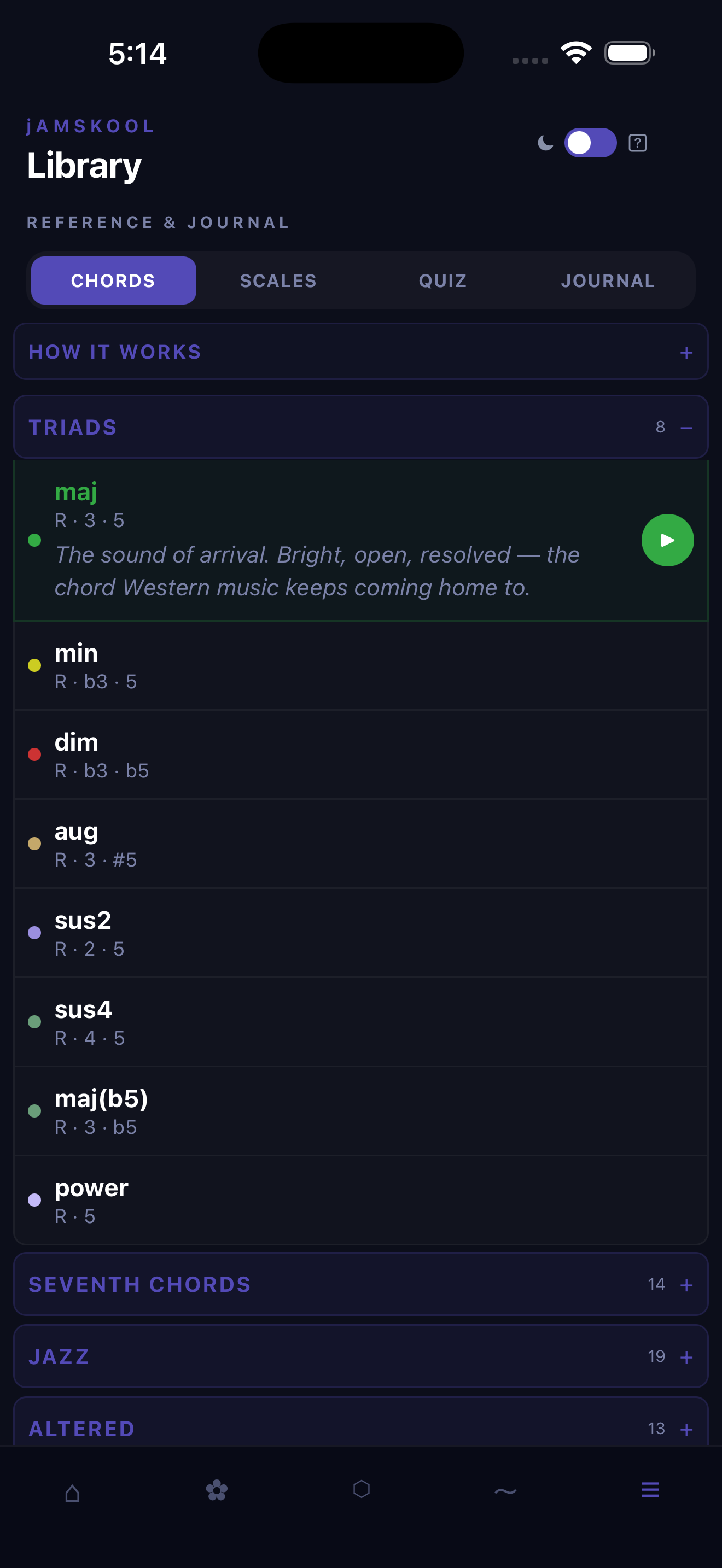
3The major third. Makes the chord bright or happy. Easy, open, effortless — the sound of arrival.
4Urgent, straining, yearning. Heroic, and always reaching up toward the 5.
#4/b5The tritone. Exactly halfway between root and octave. The ♯4 is the eerie sound of infinity — 4's opposite. The ♭5 is the weakness that is the opposite of 5's power.
5The sound of power. The sound of strength. The most stable interval after the octave — the skeleton of the chord.
#5/b6As ♯5: augments the chord, gives it vastness. As ♭6: foreboding and dark — a shadow entering the chord.
6Buoyant, airy, fun. Sits high with nothing pulling at it. Warm and unhurried.
b7Tough, weathered, cool. The sound of Hard Rock and the streets. Makes chords bluesy, funky, resigned.
7Melancholy and self-pitying. One semitone from home but can't quite muster the strength to get there.
EXTENSIONS
b9Maximum tension voiced above the chord. The b2 elevated — bitey and anxious high up in the stack.
9Lush and open. The 2 voiced an octave higher — adds space without changing the mood.
#9Electric contradiction. Same pitch as the minor third but voiced above the major. The Hendrix chord lives here.
11A sustained lift. The 4 elevated — patient and unresolved, hanging in the air.
#11The tritone voiced high above — the ground disappears pleasantly. Lydian territory.
b13Dark and cinematic. The b6 elevated — serious and gravitas at the top of the chord.
13Warmth and completeness. The 6 voiced high — the chord feels like it has already arrived.